Our Current Concert Programme
Enjoy a Session of Great Music
We normally present 2, and occasionally 3 concerts per Season. Just scroll down to find out the details and how to book your seats. These are in addition to singing events like our "Come and Sing Workshop" (all welcome) event, which you can also find below.
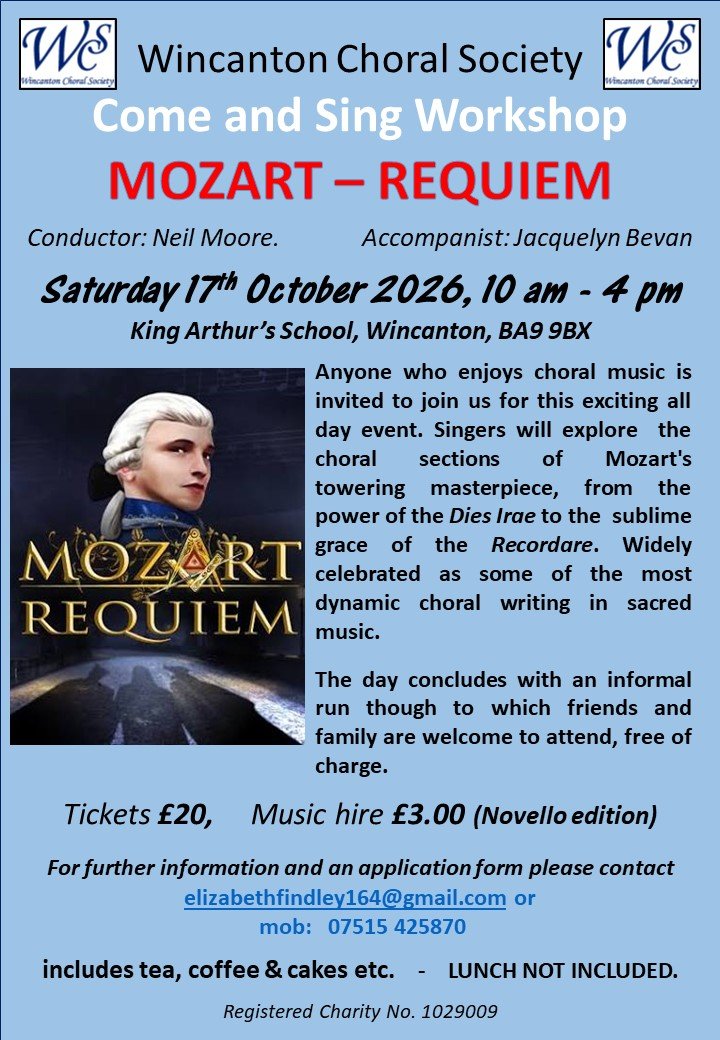
Come & Sing - Sat 17 Oct 2026
Venue:
The Main Hall, King Arthur's School
10am - 4pm
Join us for a rewarding day of singing, learning and making music together, culminating in an informal performance for family and friends, who are warmly invited to attend free of charge.
Workshop fee: £20 per person, plus £3 music hire if required.
See the poster opposite for details of how to book your place.
Come & Sing - All Welcome
Experience the drama, beauty and sheer emotional power of Mozart’s Requiem in this inspiring choral workshop. From its haunting opening to its thrilling choruses and moments of profound reflection, this much-loved masterpiece offers singers a wonderful opportunity to explore some of the most moving music ever written.
Christmas Concert - Sun 13 Dec 2026
Venue:
The Church of St Luke & St Theresa
South Street, Wincanton
William Byrd’s Rorate caeli desuper is a beautiful and expressive work of quiet intensity. Its rich harmonies and flowing vocal lines create an atmosphere of longing and hope, showcasing the warmth, blend and expressive depth of the choir. A captivating jewel of Renaissance choral music.
Haydn’s Little Organ Mass is a delightful and uplifting work, combining elegant melodies with moments of warmth, joy and quiet reflection. Its graceful choral writing and sparkling organ accompaniment make this much-loved mass a charming showcase for the choir and a pleasure for audiences alike.
A Baroque Christmas
Vivaldi,'s Magnificat, Byrd's Rorate caeli desuper, Haydn's Little Organ Mass and a selection of Christmas carols.
Experience the vibrant energy and breathtaking beauty of Vivaldi’s Magnificat. This exhilarating choral masterpiece takes singers and audiences on a dramatic journey through moments of powerful proclamation, lyrical reflection and joyous celebration. With its infectious rhythms, soaring melodies and spectacular choral climaxes, Vivaldi’s Magnificat is a thrilling showcase for the passion, versatility and collective sound of the choir — an uplifting musical experience not to be missed.