
This Season's Concert Programme
Enjoy a Session of Great Music
We normally present 2, and occasionally 3 concerts per Season. Just scroll down to find out the details and how to book your seats. These are in addition to singing events like our "Come and Sing Workshop" (all welcome) event, which you can also find below.
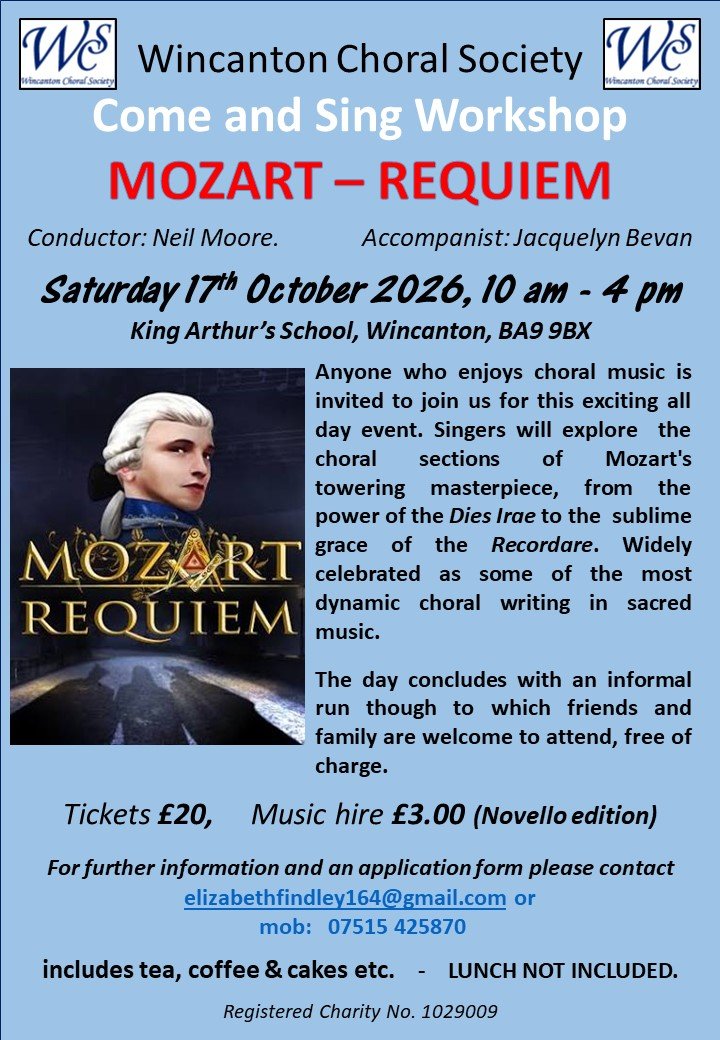
Come & Sing - Sat 17 Oct 2026
Venue:
The Main Hall, King Arthur's School
10am - 4pm
Join us for a rewarding day of singing, learning and making music together, culminating in an informal performance for family and friends, who are warmly invited to attend free of charge.
Workshop fee: £20 per person, plus £3 music hire if required.
See the poster opposite for details of how to book your place.
Come & Sing - All Welcome
Experience the drama, beauty and sheer emotional power of Mozart’s Requiem in this inspiring choral workshop. From its haunting opening to its thrilling choruses and moments of profound reflection, this much-loved masterpiece offers singers a wonderful opportunity to explore some of the most moving music ever written.
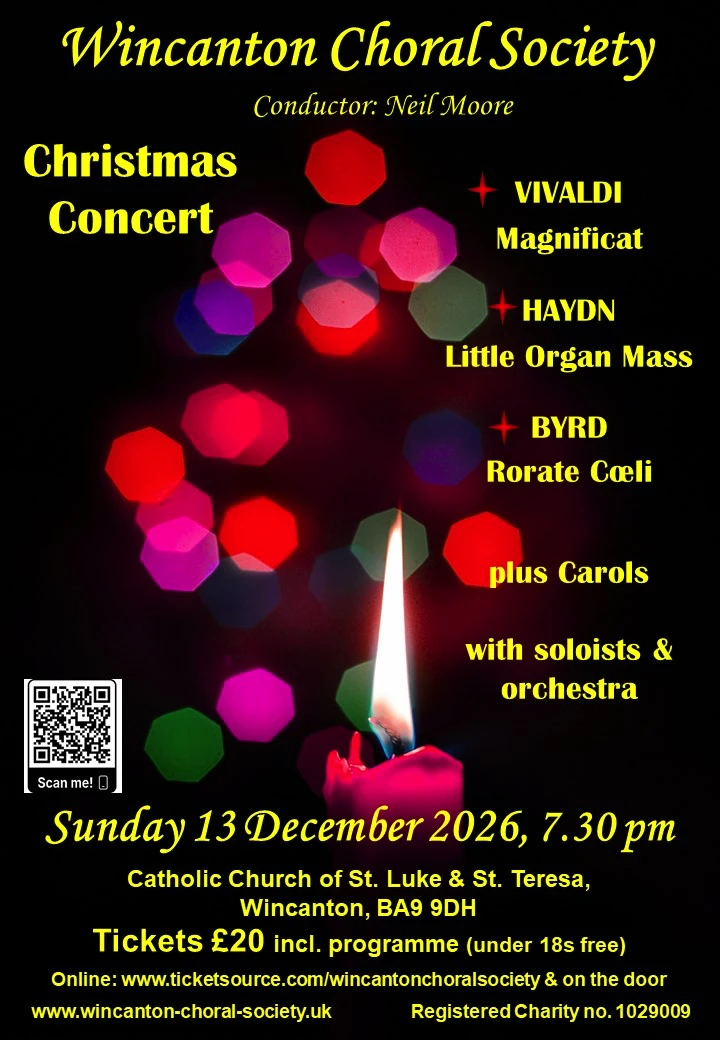
Christmas Concert - Sun 13 Dec 2026
Venue:
The Church of St Luke & St Theresa
South Street, Wincanton
7:30 pm
William Byrd’s Rorate caeli desuper is a beautiful and expressive work of quiet intensity. Its rich harmonies and flowing vocal lines create an atmosphere of longing and hope, showcasing the warmth, blend and expressive depth of the choir. A captivating jewel of Renaissance choral music.
Haydn’s Little Organ Mass is a delightful and uplifting work, combining elegant melodies with moments of warmth, joy and quiet reflection. Its graceful choral writing and sparkling organ accompaniment make this much-loved mass a charming showcase for the choir and a pleasure for audiences alike.
A Baroque Christmas
Vivaldi,'s Magnificat, Byrd's Rorate caeli desuper, Haydn's Little Organ Mass and a selection of Christmas carols.
Experience the vibrant energy and breathtaking beauty of Vivaldi’s Magnificat. This exhilarating choral masterpiece takes singers and audiences on a dramatic journey through moments of powerful proclamation, lyrical reflection and joyous celebration. With its infectious rhythms, soaring melodies and spectacular choral climaxes, Vivaldi’s Magnificat is a thrilling showcase for the passion, versatility and collective sound of the choir — an uplifting musical experience not to be missed.
Spring Concert - Sun 16 May 2027
Venue:
Venue to be decided
7:30 pm
Handel's Oratorio "Saul"
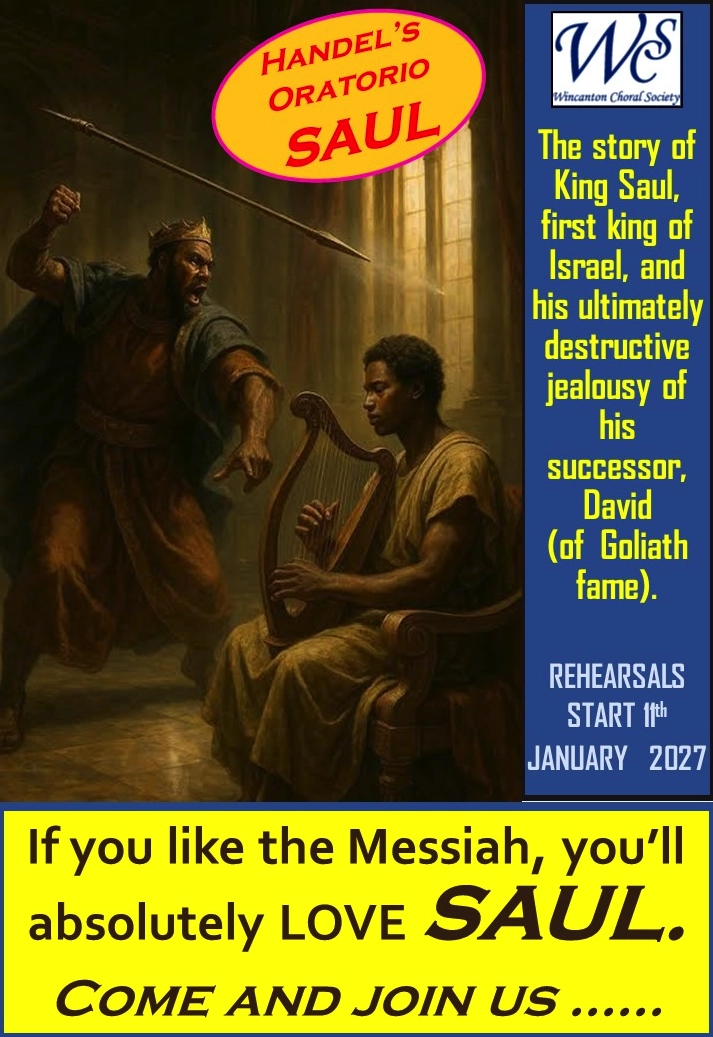
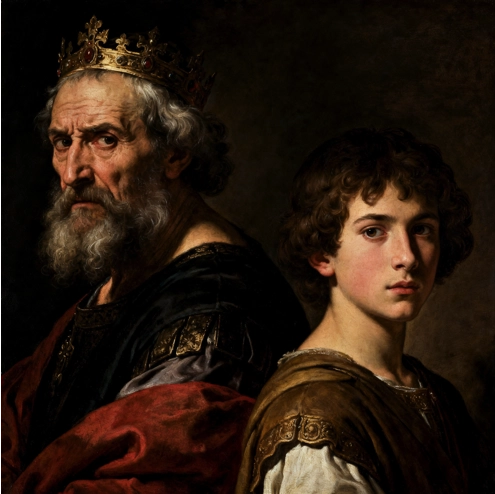
Handel’s Saul is one of his most impressive and dramatically compelling oratorios, combining musical splendour, emotional depth and a strong sense of theatrical drama. First performed in 1739, the work is based on the biblical story of King Saul, his growing jealousy of David and his eventual downfall. Handel brings this familiar story vividly to life through a remarkable variety of musical styles, creating a work that is as much a dramatic experience as a religious oratorio. The characters are portrayed with great psychological insight, particularly Saul himself, whose initial strength and authority gradually give way to jealousy, insecurity and madness. In contrast, David is presented as a figure of innocence, courage and loyalty, and the relationship between the two provides the emotional heart of the work.
One of the most striking features of Saul is Handel’s imaginative and colourful orchestration. He makes particularly effective use of instrumental combinations to enhance the drama and atmosphere of the story. The inclusion of unusual instruments for the period, including the carillon and trombones, adds a distinctive richness to the orchestral sound.
Handel also demonstrates his extraordinary gift for writing choruses, ranging from moments of great excitement and celebration to passages of profound sadness and reflection. The choral writing is often grand and powerful, yet always closely connected to the unfolding drama.
The vocal writing is equally impressive, with expressive arias and ensembles allowing the individual characters to reveal their emotions and personalities. Handel shows particular skill in portraying Saul’s increasingly disturbed state of mind, making his eventual collapse both convincing and deeply tragic. The contrast between Saul’s troubled character and David’s calm, noble presence gives the work much of its dramatic tension. Although Saul is perhaps less familiar to audiences than Handel’s Messiah, it is arguably one of his finest dramatic achievements. It demonstrates his remarkable ability to combine memorable melodies, inventive orchestration and powerful storytelling into a cohesive and compelling whole. It remains a richly rewarding work, deserving of a much more prominent place in the concert repertoire.