
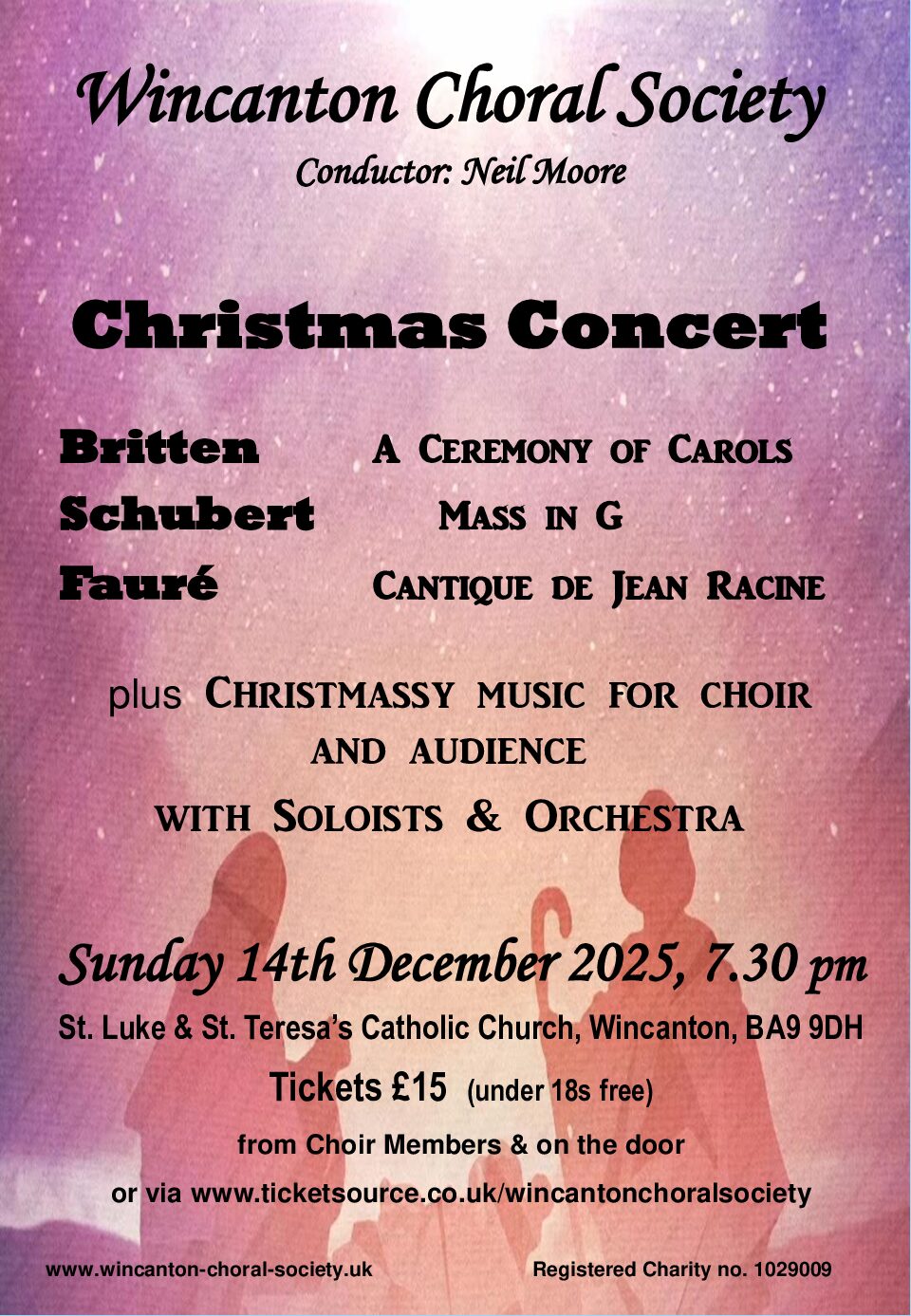
Winter/Christmas Concert
Schubert Mass No. 2 in G Major, D 167. Britten - Ceremony of Carols. Fauré - Cantique de Jean Racine.
Franz Schubert’s Mass No. 2 in G major, D 167, composed in 1815, is a luminous example of his youthful mastery of sacred music—a true “Missa brevis” or short mass. Remarkably, Schubert completed it in less than a week (March 2–7). It’s the most celebrated of his three shorter masses.
Scored modestly for soprano, tenor, and bass soloists; SATB choir; string orchestra; and organ, the piece exudes a devotional and contemplative atmosphere. Solo passages are sparse, emphasizing the collective worship experience.
The mass unfolds across six movements—Kyrie, Gloria, Credo, Sanctus, Benedictus, and Agnus Dei—and typically lasts around 22 minutes. In essence, Schubert’s Mass No. 2 in G major stands as a gentle and lovingly crafted work, combining graceful melodies with simple yet expressive scoring.
Benjamin Britten’s A Ceremony of Carols, Op. 28 is a beloved choral work composed in 1942. It draws on medieval English texts and Gregorian chant, scored for treble voices and harp, spanning 11 movements and bookended by processional chants. Its vivid contrasts—from exuberant carol settings to soulful lullabies and a central harp interlude—combined with its historical genesis during wartime travel, make it a timeless and evocative Christmas classic.
Gabriel Fauré's Cantique de Jean Racine was composed in 1865 whilst Fauré was still a student at the École Niedermeyer de Paris. Although compact in scale, the “Cantique” displays in microcosm many of the hallmarks of Fauré’s later sacred style: a serene, flowing melodic line, refined harmonic warmth and transparent texture.
Originally written for mixed chorus and organ (or piano), the work has since appeared in arrangements for strings, harp and orchestra.
The Listener will observe how the vocal lines soar with lyrical calm in the opening, how the harmony shifts gently yet in subtle expressive ways, and how a restful introspection is sustained throughout — a quietly radiant invocation that still speaks with youthful grace and devotion.
There will be additional carols for the audience to join with the choir.